|
|
ENGLAND
Pay and conditions are pushing overseas nurses out of the UK
The UK has become a “springboard” for internationally recruited nurses to gain experience and then move to other high‑income countries with better pay, conditions, and career opportunities, members of Unison have warned.
During the first day of Unison’s 2025 Health Care Service Group Conference, members discussed the challenges faced by internationally recruited nurses working in the UK and their reasons for leaving.
Data published by the Nursing and Midwifery Council in December 2024 showed that there had been a 33% increase in the number of international professionals leaving the register.
Gamu Nyasoro, a nurse belonging to Unison’s Nursing and Midwifery Occupation Group, put forward a motion on “improving conditions for internationally recruited nurses and midwives” in the UK.
She warned that many overseas nurses were “leaving the UK to work elsewhere”, describing the UK as a mere “stepping stone” to moving to other high‑income countries like the US, Canada, and Australia.
Source: Nursing Times
|
|
|
|
INDIA
More Indian nurses are going abroad to earn 5x more
Indian nurses are increasingly seeking employment opportunities abroad, driven by a global shortage of healthcare professionals and the promise of better pay and working conditions. The demand for Indian nurses is particularly high in areas such as critical care, geriatrics, and prenatal services. To attract more professionals, several countries have eased entry requirements, including language proficiency and licensing exams.
Countries like Germany, Ireland, Malta, the UAE, and Belgium are actively recruiting Indian nurses, offering competitive salaries and additional perks.
Why are Indian nurses in demand overseas?
Indian nurses are in demand because of their strong clinical skills, English proficiency, and willingness to relocate.
Source: Business Standard
|
4%
of the U.S. nursing workforce is Filipino, even though they comprise only 1% of the U.S. population.
|
|
Source: National Institutes of Health – USA
|
|
|
|
15,012
RNs registered in Manitoba, Canada as of December 2024, still the RN vacancies are on the rise in the province.
|
|
Source: College of Registered Nurses of Manitoba
|
|
|
|
250,000–300,000
Indian nurses have secured jobs overseas since 2020.
|
|
Source: Economic Times
|
|
|
|
|
|
“I had a great experience with the whole team of INSCOL. Special thanks to the team, they were always there for any support from the initial phase of the process, and the instructors were wonderful IFC classes. I’m super happy to be a part of INSCOL and would suggest anyone looking forward to studying in Canada.”
Josmi Shaji
Kerala, India
Palliative Care – Multidiscipline
Niagara College, Canada
Sep'24 Intake
|
|
|
“I am deeply thankful to INSCOL for their constant support throughout my journey to study in Canada. With their guidance, I am now much closer to realizing my dream of becoming a Global Nurse. I strongly recommend INSCOL to all Internationally Educated Nurses who are looking to start this life‑changing journey.”
Sharon Jemutai Koech
Kenya, Africa
Palliative Care – Multidiscipline
Niagara College, Canada
May'25 Intake
|
|
|
“Thank you INSCOL for all your guidance and support throughout this long journey. I will surely recommend the same for my colleagues, my friends and classmates. The service provided is excellent and I’m still going to continue learning till the future.”
Tsering Chedon Bhutia
Bhutan
Coronary Care Nursing
Seneca Polytechnic, Canada
Jan'25 Intake
|
|
| |
|
CANADA
Significant changes to the registration requirements for nursing applicants in Ontario are now in effect
These changes are a major part of CNO’s efforts to modernize the process for assessing and registering nursing applicants in Ontario. They enhance CNO’s registration process for internationally educated applicants and support a smoother transition to nursing practice in Ontario.
CNO now accepts nursing education recognized or approved in any jurisdiction, provided it adequately prepares nurses to practice. If the applicant for the category they are applying to, and it meets the credentials required – RN applicants need a nursing program that prepared for RPN and RN applicants – for the category they are applying to and meets the updated education requirement, they will become eligible to write the NCLEX-RN or REx-PN examination.
The introduction of a Transition to Practice requirement is designed to ensure that RN and RPN applicants are familiar with the competencies required in the context of practice in Ontario. As local applicants will meet this requirement by completing their nursing education within Canada or showing evidence of current registration in a Canadian jurisdiction. Others will meet the requirement by completing a Transition to Practice course approved by CNO.
Source: CNO

|
|
PHILIPPINES
Bleak job prospects for Pinoy nursing graduates
Ateneo de Manila University researchers warn that young Filipinos graduating with a degree in nursing or medicine face an uphill battle for stable employment, fair pay, and meaningful roles in the local public health system.
This comes as the Philippines faces a massive shortage of health professionals, with at least 6 physicians per 10,000 people, below the international standard of 10 per 10,000, and over 127,000 vacancies for nurses, particularly in rural areas and private hospitals.
The researchers found that many new graduates feel lost and unsupported when they join the workforce.
According to many of the researchers’ interviewees, the country’s medical
and nursing education system is too focused on hospital-based care,
leaving them ill-prepared to handle community work, government
systems, and health programs.
Further, many health facilities point to restrictive hiring rules and budget
ceilings as barriers to filling vacant posts. For example, local government
units (LGUs) are required to allocate no more than 45% of their annual
budget to salaries. This forces the overworked nurses to take on multiple
roles, often without additional pay.
Sources: Asian Research Network
|
|
|
|
|
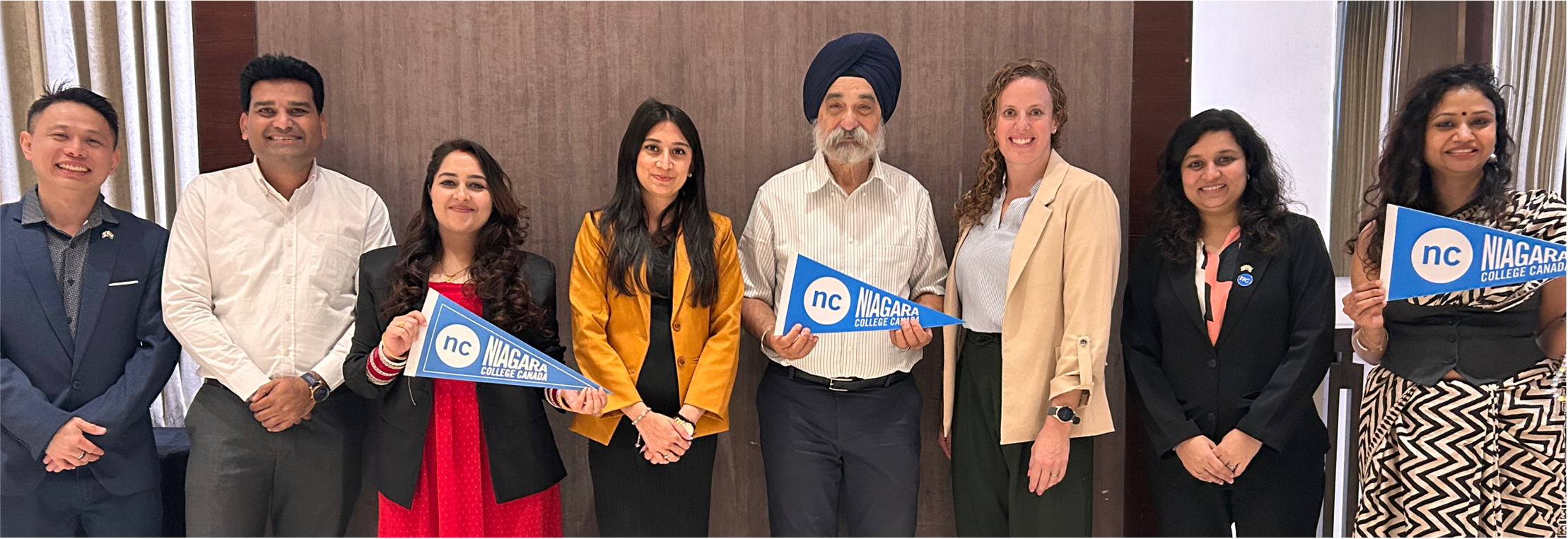
In April, INSCOL India and Niagara College, Canada, hosted workshops and seminars for nursing students across different cities of Punjab. Led by the faculty members of Niagara College, Prof. Alison Cousineau, Prof. Jeffrey Ko, and South Asia Business Development Officer Gayatri Kochak, the sessions featured interactive simulations, virtual reality, and discussions on global nursing careers, empowering nurses on their journey to becoming Global Nurses.
|
|
|
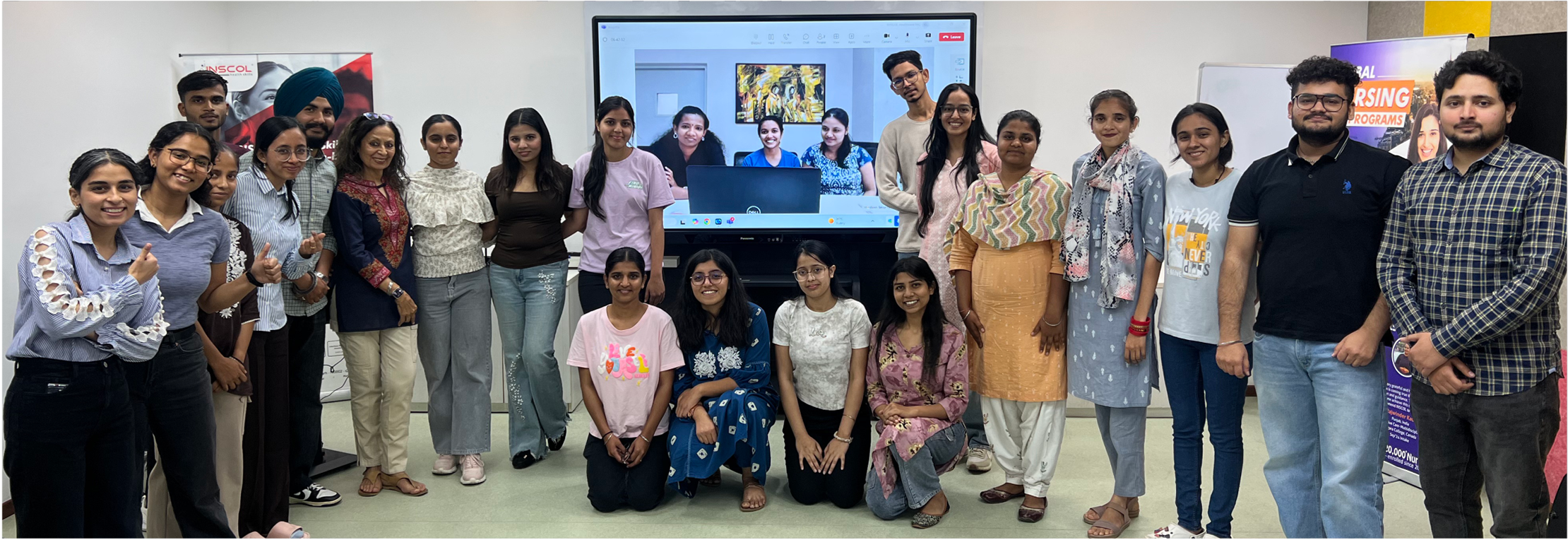
A glimpse of the INSCOL Foundation Program conducted at our Chandigarh and Kochi facilities for nurses enrolled in the May’25 intake of nursing programs in Canada.
|
|
|
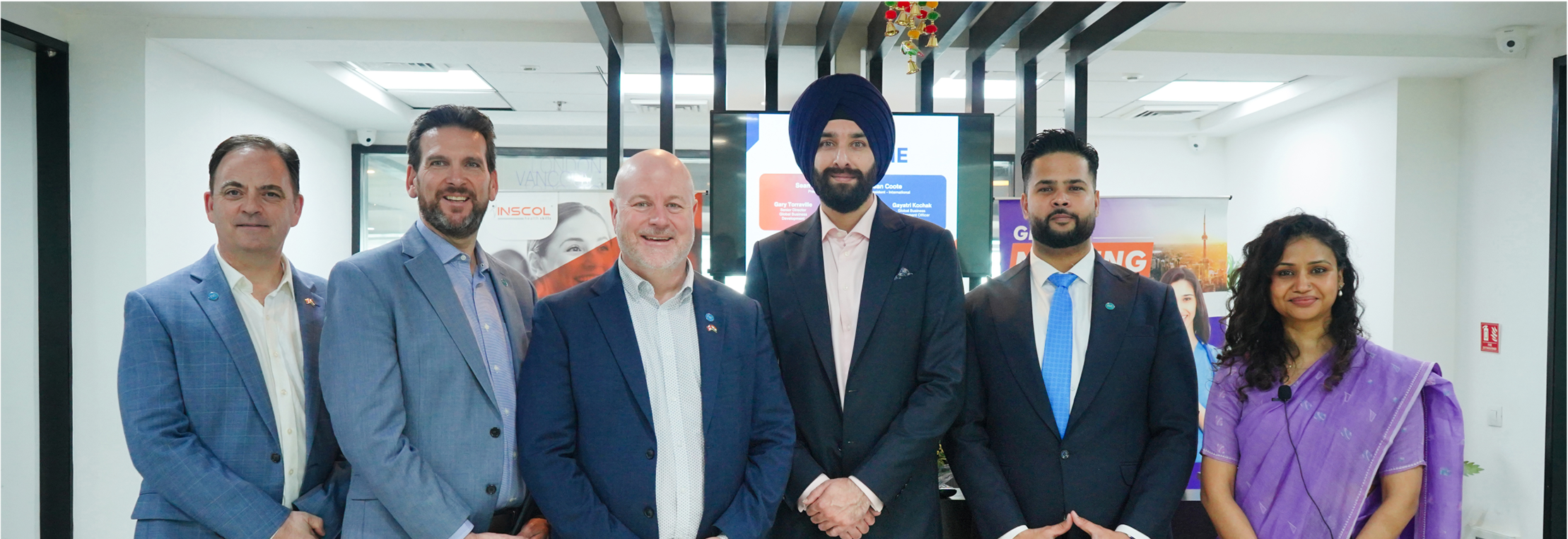
In the frame - Gary Torraville (Senior Director, Global Business Development), Sean Coote (Vice President - International), Sean Kennedy (President), Pukhraj Singh Gujral (CEO, INSCOL), Karan Salgotra (Manager, Global Business Development) and Priti Saini (AVP, Business Development, INSCOL).
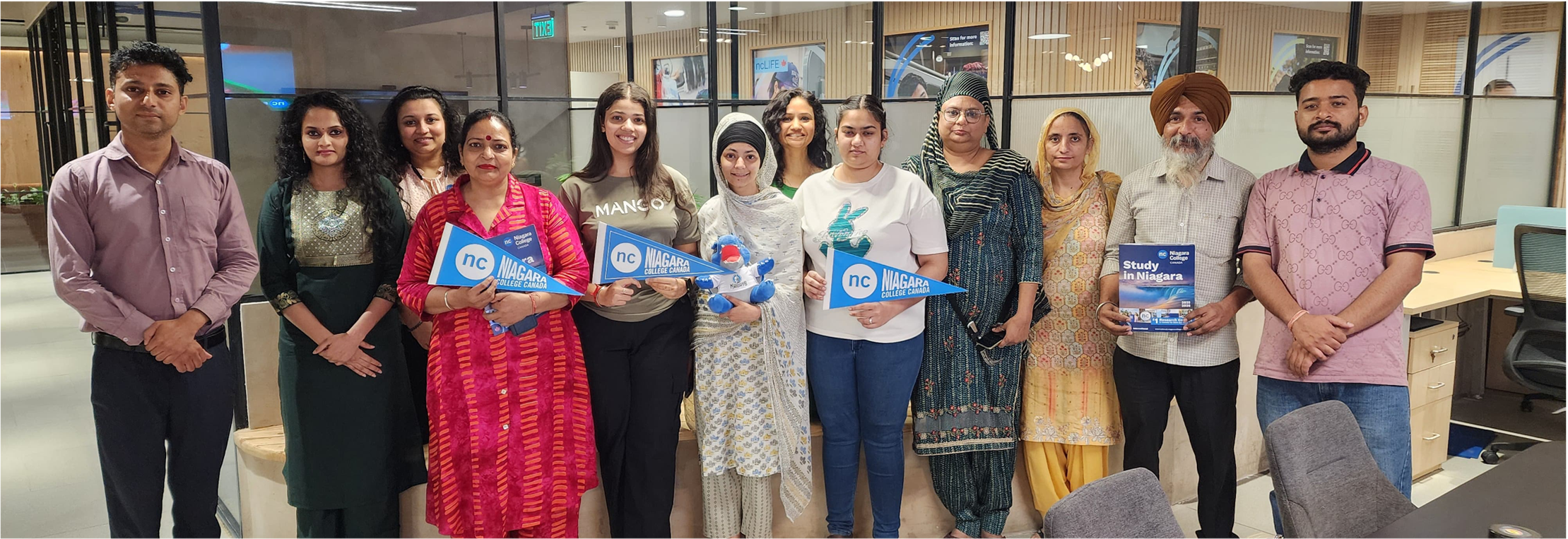
To celebrate Niagara College's new Partnership Centre in Chandigarh, INSCOL hosted an engaging
session attended by more than 50 students, nurses, and parents.
|
|

INSCOL Nurses at Niagara College’s Spring Convocation
on June 12.
|

INSCOL Nurses at Seneca Polytechnic’s Summer Convocation on June 21.
|
|
|
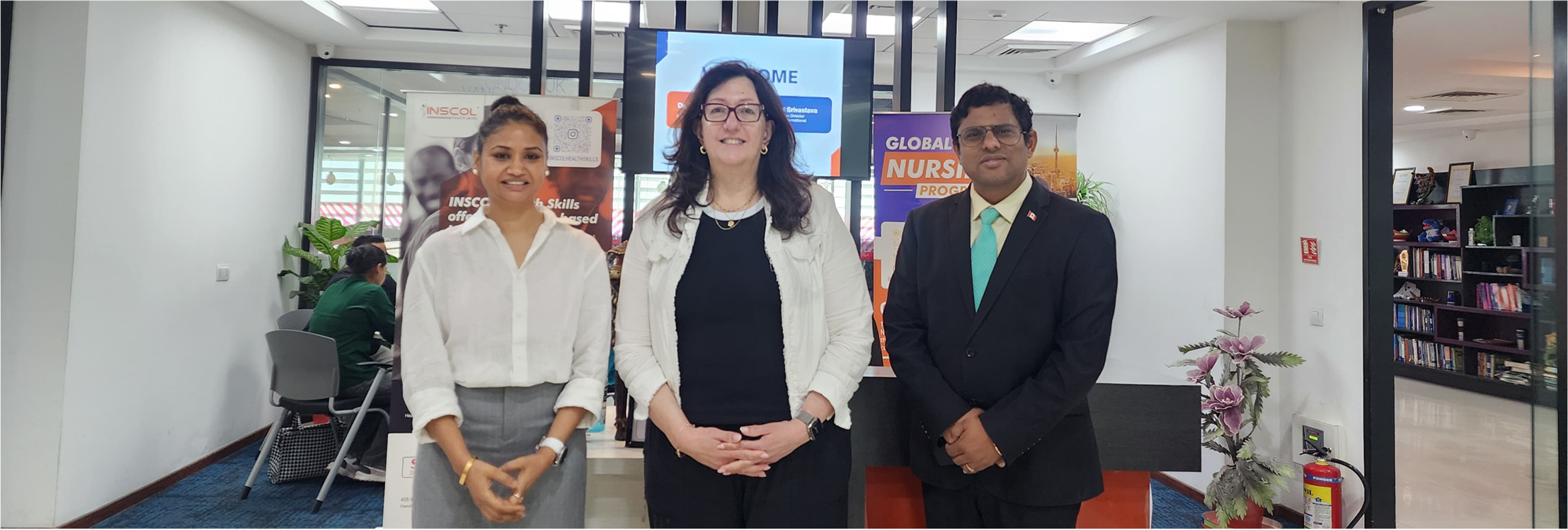
INSCOL Chandigarh had the honor of hosting Dr. Marianne Marando, Vice President, Business
Development and International, and Mr. Prashant Srivastava, Executive Director, Seneca International, from
Seneca Polytechnic on June 10. The discussions focused on strengthening student support and exploring
sustainable growth strategies.
|
|
|
The Niagara College Admission Day on June 17 was a wonderful opportunity to meet Gayatri Kochak,
Global Business Development Of icer, Niagara College, at the Chandigarh Partnership Centre
while connecting with aspiring Global Nurses.
|
|
|
From Study Permit to Canadian Citizenship:
|
Story of our Alumna, Siya Joshi
|
|
|
Q: Can you walk us through the beginning of your journey, what inspired you to come to Canada, and how did you find out about INSCOL?
After graduating in India, I knew I wanted to build a meaningful career in Canada, not just take any random course and waste time. While researching, one of my cousins, who’s also a nurse, told me about INSCOL, as he had gone through them himself. That’s when I started looking into it seriously. I did extensive research afterward because INSCOL was quite far from my home state, Gujarat. I wanted to be sure.
It wasn’t easy at first. Finding all the right resources was a challenge. When dealing with a new consultancy, there’s always some fear, especially about how things work in another country. I spoke with a couple of people who had come to Canada through INSCOL. Their experiences and references were extremely positive, which gave me the confidence to move forward.
The staff members at their Chandigarh office were exceptional. They provided complete information about the courses, and everything felt very transparent and trustworthy. I didn’t have any doubts.
I first visited Chandigarh with another girl from Gujarat just to learn more. Later, I returned on my own for the INSCOL Foundation Program (IFP). It was a great introduction to Canadian life, academics, assessments, CPR training, and most importantly, to how nursing works here. They also helped with NCLEX preparation and gave us a strong orientation about the Canadian healthcare system.
Right after completing the IFP, I received my visa, which was such a relief.
|
|
|
|
Q: How did your academic journey progress once you were in Canada?
In 2017, I completed my initial studies in India and began preparing for IELTS. By 2018, I was attending the IFP in Chandigarh, and soon after, I came to Canada. I achieved the required IELTS score and enrolled in the Nursing Leadership and Management program at Seneca Polytechnic.
INSCOL’s team was incredibly attentive to every student’s needs. I even visited their Canadian office, and their support continued here as well.
For my second program, I chose Chronic Disease Management. It was a strategic decision that helped make me eligible for the NCLEX‑RN exam. I completed 250 hours of clinical placement at Etobicoke General Hospital, which played a crucial role in getting my first job. I cleared my RN eligibility on the first attempt and directly pursued the NCLEX‑RN instead of taking the RPN route.
These programs gave me invaluable exposure—understanding hospital protocols, medications, documentation, and overall clinical practice in Canada.
|
|
They later helped with my Post‑Graduation Work Permit (PGWP) too. Recently, I also received my Canadian citizenship.
INSCOL also assisted me with extending my study permit, applying for NNAS and the CNO process, and even helped with my PR application under the TR to PR pathway. Manpreet from the Mississauga office supported me throughout. She was available on‑call and helped me prepare and submit the documents within 20 minutes of the portal opening. I’ve recommended INSCOL to many—at least four to five people from my school in Gujarat have followed a similar path.
|
|
Q: Did you ever question your decision to move?
Honestly, never. It had always been my dream to come to Canada. Even when I applied for my student visa, I was offered a government job in India. It was a tough call, especially being an only child. But choosing Canada was the right decision for my career.
|
|
|
The nursing profession here is far more rewarding, you are respected, trusted, and given meaningful responsibilities. You’re also encouraged to grow. Physicians, managers, and educators value your opinion. It’s a very inclusive environment.
|
|
Q: Was your family supportive throughout? Have they visited you in Canada?
Yes, my parents were very supportive from the start. They got their visas last year, but I visited India instead. Hopefully, they’ll be visiting me here by the end of this year.
Q: How would you describe your overall experience with INSCOL?
I would rate it 10/10. I never faced any issues because they were always responsive and helpful. Even when I had silly doubts or heard confusing things from friends, they always clarified things for me. They’ve helped thousands of nurses, so their knowledge is solid—not just about immigration but also about NCLEX, RPN, and licensing processes.
I believe INSCOL is the best choice for nurses. They’re trustworthy, they offer highly specialized and not available elsewhere. I always advise others not to waste time on unrelated programs just to enter Canada. Choose a healthcare focused path—it adds real value.
|
|
|
|
Q: Are you now practicing as a Registered Nurse?
Yes, I’m working full-time as a Registered Nurse. After passing the NCLEX‑RN, I was hired through the NRG (Nursing Graduate Guarantee) program. I trained for three months at Brampton Civic Hospital under an excellent preceptor, which helped me grow a lot. I wanted to work in home care when I moved to Mississauga, so I joined ParaMed. While Partners in Wellpoint Inc. is local, I still work casually at Brampton Civic as well.
Q: Any advice for aspiring nurses reading this, especially given the changing immigration landscape?
Yes, while immigration rules have changed, healthcare professionals,
especially nurses, still have great opportunities. If you're clear on your
goals, the nursing route is still viable. I believe that if aspiring nurses
give 200%, they will succeed here.
There are still vacancies and strong demand for nurses. Some of my
friends even got their PR through the PNP route. But for me, getting a
study permit was the right choice. I didn’t want to wait indefinitely in
India for PR. Studying here gave me firsthand insight into the
education system and healthcare environment, which prepared me
better for the profession.
|
|
|
|